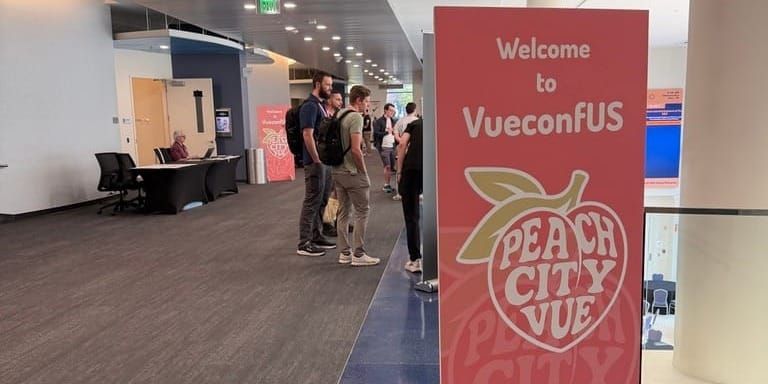

Many of you don't know this, but I've attended every VueConfUS (except for the one during the pandemic) and it has a special place for being the conference that kicked off one of the most amazing journeys I've had in my career. So, naturally, when I was invited to teach again at VueConfUS this year, I had to accept!
🏛️ The Venue
This year, VueConfUS was held in Atlanta, GA at the Georgia Tech Learning Center from May 19-21st.
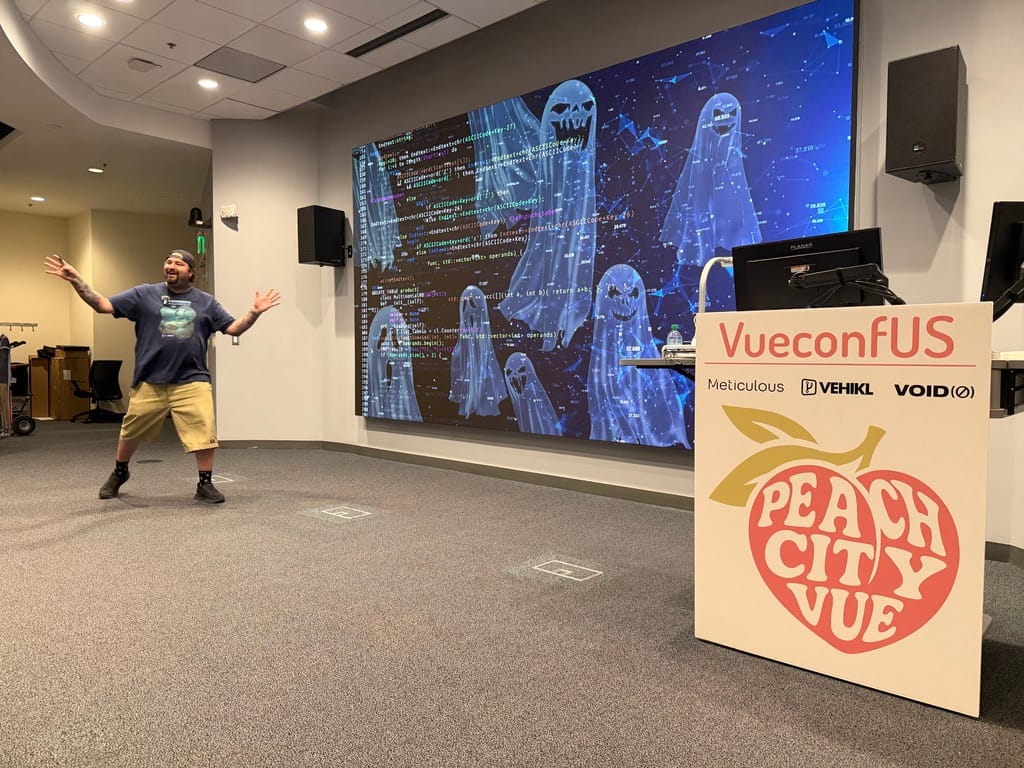
As someone who's attended multiple conferences, there was something really nice about being in a campus building where all the infrastructure (i.e., charging, wifi, A/C, etc.) was reliable. Plus, the whole college atmosphere made for a prime environment for learning from one another.
Though fun fact, I learned the hard way that when it rains it Atlanta, it POURS....

👨🏫 My Workshop
As I have for the past few years, I taught my "Proven Patterns for Building Enterprise Vue Apps" workshop.
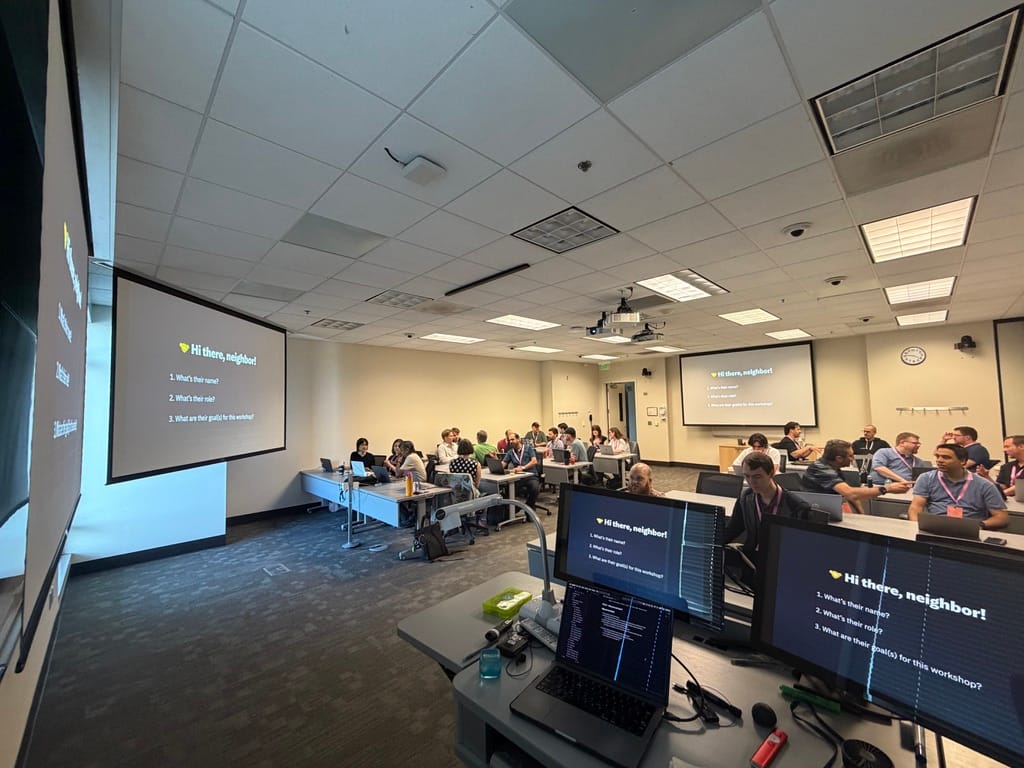
When teaching a workshop on proven patterns, something that people might not realize about it is that it covers just about every area of development with Vue. As a result, one of the biggest challenges to ensuring attendees get the most out of it is figuring out everyone's existing knowledge.
This year, I had one of the most interesting mixes of attendees where:
- Some had little to no experience with Vue 3.
- There were still attendees who have not made the switch to TypeScript yet because their codebases chose not to migrate.
- Many are using Composition API, but Options API is far from gone and still actively used as the primary authoring style in some teams.
The reason I mention this is because while many of us are quick to adopt new tools and pave the way forward, this is not always an option for teams who either inherit legacy codebases or simply lack the staffing needed to keep up with the latest and greatest.
For instance, while some may be skeptical of teams who stick with Options API, I talked to multiple teams who still found that the convention offered by Options API was better for their team to maintain higher quality code. And while others might disagree with them, these stories to me are excellent reminders of how teams need to choose what's best for them rather than adhere to arbitrary standards of other people.
At the end of the day, the users do not care whether their feature is written in TypeScript or whether it uses Composition API or not. What matters is you’re able to ship useful features to them that are as bug-free as possible.
🗣️ The Talks
The theme of this year was, unsurprisingly, AI (within the context of Vue of course, but much of the commentary could certainly be generalized).
What struck me as particularly interesting is the fact that there were multiple talks that seemed to share this idea that "you won't need to manually type code again." It's a popular sentiment I've seen on social media, where there's this world where you're the "conductor" of a team of AI agents who do your bidding as you wish.
While I don't deny the impact that AI is having on our work, I have to say that I am personally skeptical of a lot of the claims I heard. It's not to say that there aren't people working like this already, but the idea that this would transform the entire industry is one I believe is more fear-mongering than reality.
For instance, in this ideal "conductor" scenario, agents run subagents which can run their own subagents and you theoretically arrange multiple lines of work in parallel while supposedly churning out useful work. Even if I were to assume this is true at face value, I question the economics of this workflow. We talk as if tokens are abundant in the way internet bandwidth and computing power are available to us, when the reality could not be further from the truth.
Another thing I've noticed about conference talks is that there is often an allure to make grandiose statements to grab the listener's attention. However, particularly with the AI content, I find it concerning as many of these claims are at best speculative and yet they speak with such confidence and certainty.
The simple truth is that we are in new territory. Yes, our workflows are changing because of AI, but the economics and accountability aspects of it are still far from solved and carry heavy implications as to how it ultimately impacts our work. And I hope that more speakers approach it with more nuance and consideration.
I could drone on about this, but I think it'd be best to cover it in another post (or two... or three...). Suffice to say, I left even more concerned for the mental well-being of the developer community.
🍱 The Food
I don't know about you, but whenever I travel, I always do my best to enjoy the local cuisine and the best it has to offer. I've never stayed in midtown before, so it was a lot of fun to get to experience the food scene around the area.
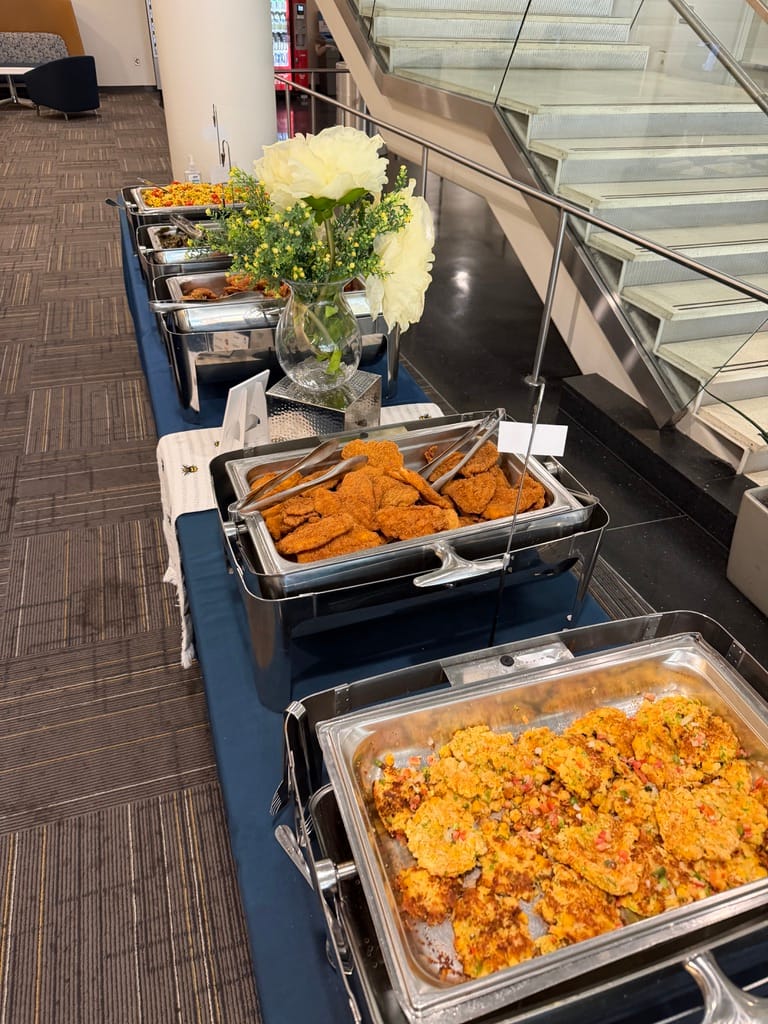
As usual, the organizers of VueConfUS had some great spreads for lunch:
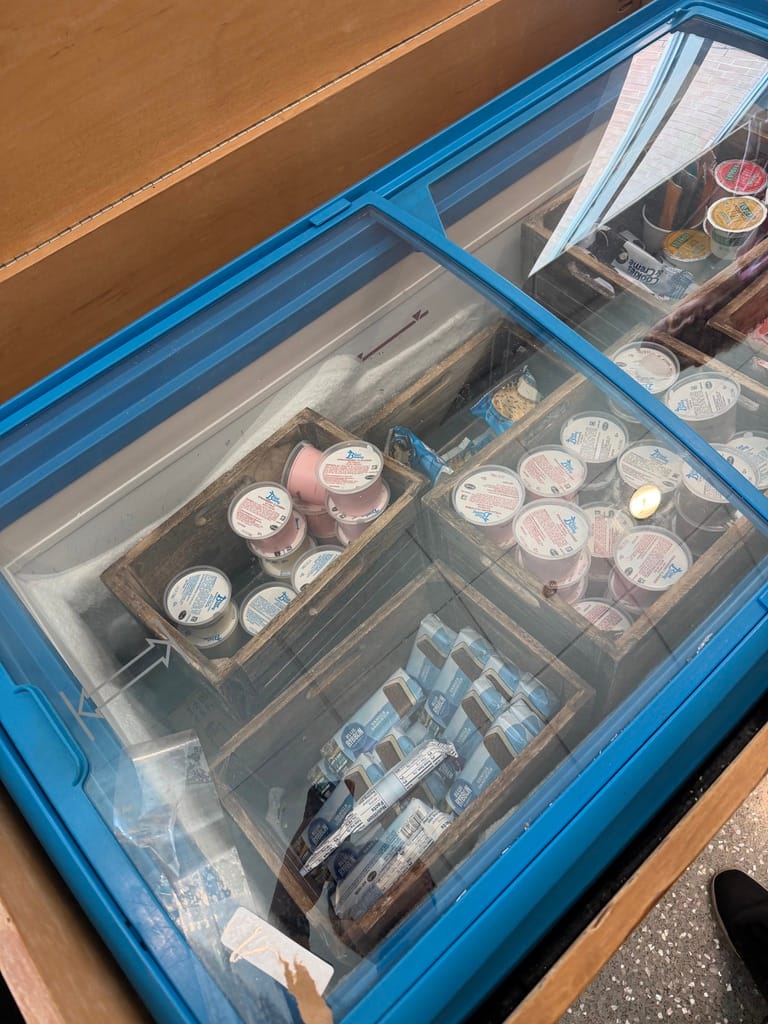
And the venue even had ice cream freezers for attendees which was a delightful surprise!
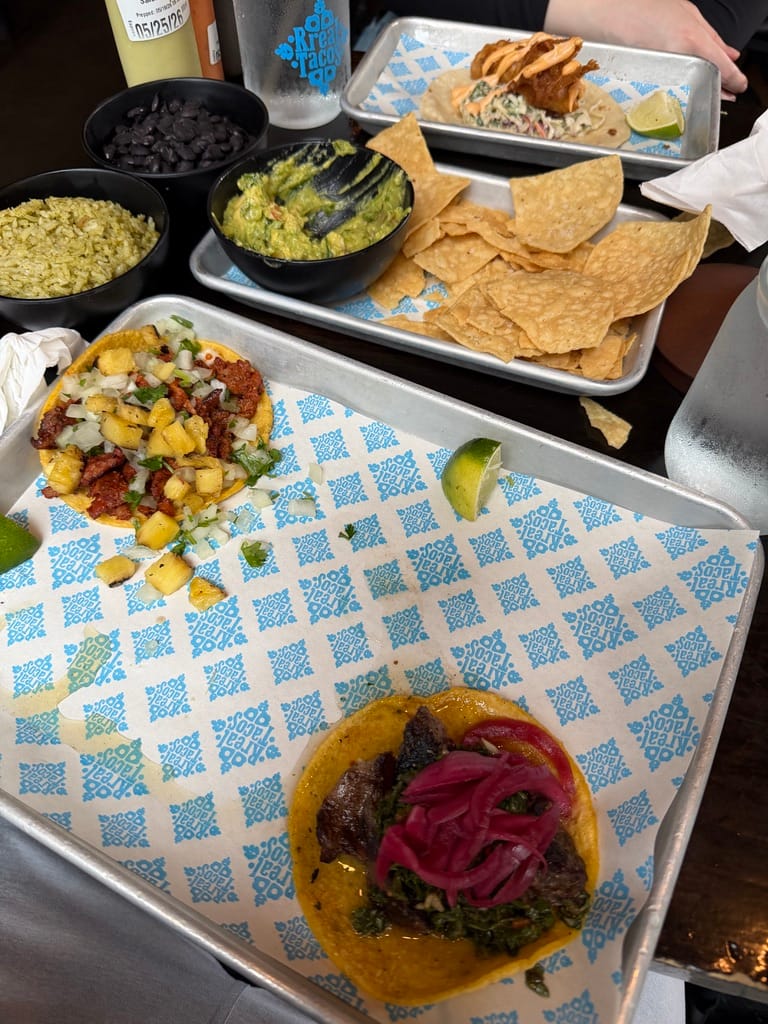
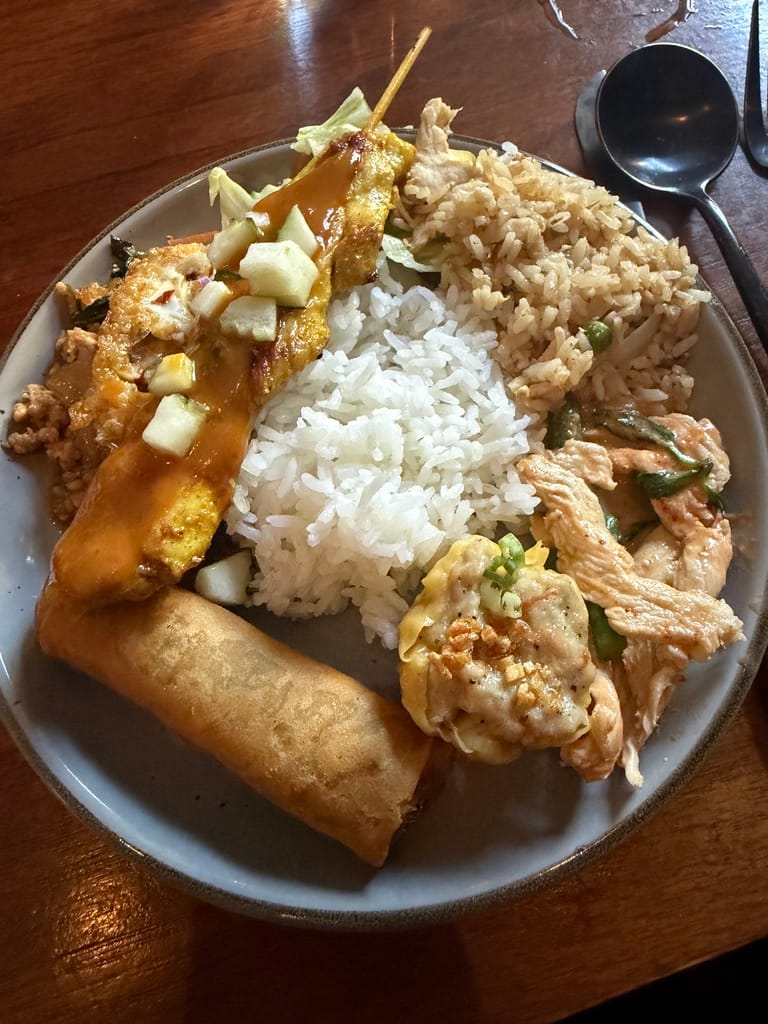
As far as some of the places I got to try, here were some of the highlights:
Closing thoughts
In a world where people have AI agents who can theoretically generate talks on whatever it is you desire, I strongly believe that in-person conferences like VueConfUS are still irreplaceable when it comes to one's growth and development. While it's easy to dismiss conferences as not being entirely tailored to your interests, I'm always amazed at how conferences are able to create a space for curiosity and inspiration where you would've never expected.
I can't even begin to tell you how many friendships I've formed throughout my career as a result of conferences that persist to this day. The smiles, the laughter, and the stories of shared misery over a drink or meal always remind me of how our work goes beyond the code we create and design and impacts the lives of those around us.